Sky9 Capital is a global venture capital firm with $2B in AUM that backs founders from the earliest stages through growth, with a stated emphasis on long-term partnership and hands-on support. The firm’s founder support covers key hires, strategic connections, and scaling support across its portfolio, which spans AI, consumer internet, fintech, deep tech, and biotech. Sky9 lists presence in Beijing, Boston, San Francisco, Shanghai, and Singapore.
“Founder-friendly” gets used so often in venture that it stops meaning much unless you define it. A better question is what, in practice, the phrase refers to, because it covers at least two distinct things that don’t always come together: how a deal is structured, and how an investor behaves after the deal closes. Both matter. Most articles about founder-friendly investing focus almost entirely on the first.

What founder-friendly means at the term level
The term-level version of founder-friendly usually refers to a set of structural choices that protect a founder’s control and economics during a financing.
At pre-seed, the most common founder-friendly term structure is a SAFE (Simple Agreement for Future Equity), originally developed by Y Combinator. A SAFE delays the valuation conversation to a later priced round and avoids most of the protective provisions that come with preferred equity. For a first-time founder who doesn’t have legal counsel reviewing every clause, a standard SAFE is significantly easier to understand than a priced seed round with a full set of investor rights.
Beyond instrument choice, the other term-level indicators that founders typically watch for include: whether the investor takes a board seat (and if so, how that changes the governance dynamic), whether there are information rights that require regular reporting, whether the investor has pro-rata rights to participate in future rounds, and whether there are any blocking provisions that give the investor veto power over major decisions.
None of these terms are inherently bad. A board seat from an investor who adds real value is different from a board seat that exists mainly to monitor. Pro-rata rights matter differently depending on whether the fund has capacity to exercise them. The goal is not to reject every investor’s right. It is to understand which rights matter, and how they will work in practice.
What to ask before signing on term structure:
Ask directly whether the fund uses SAFEs or priced rounds at pre-seed, and if priced, what the standard protective provisions look like. Ask whether the fund typically takes a board seat at this stage. Ask about pro-rata rights and whether the fund has historically exercised them. These are normal questions. A fund that reacts defensively to them is telling you something.
What founder-friendly means at the relationship level
The relationship-level version of founder-friendly is harder to evaluate from a term sheet. It describes how an investor actually behaves once the wire hits: whether they’re available when something goes wrong, whether they give you honest feedback or reflexive encouragement, whether they make introductions that convert or just make gestures that look like introductions, and whether they treat you as the person running the company or as someone to manage.
Over time, this side of founder-friendliness usually matters more than the term sheet itself. And it’s the version that most articles about pre-seed investing spend the least time on.
Some firms scale by building large internal service teams and positioning them as founder support. Sky9’s official materials describe a small-partnership model with direct partner involvement from first check through exit. That difference is worth understanding before you decide what kind of investor you want on the cap table.
Sky9’s founder support model is built around three areas: key hires, strategic connections, and scaling support. That’s the structure. What determines whether it’s actually useful is whether the partner you’re working with has the relationships and experience to deliver on each of those things in your specific market and sector.
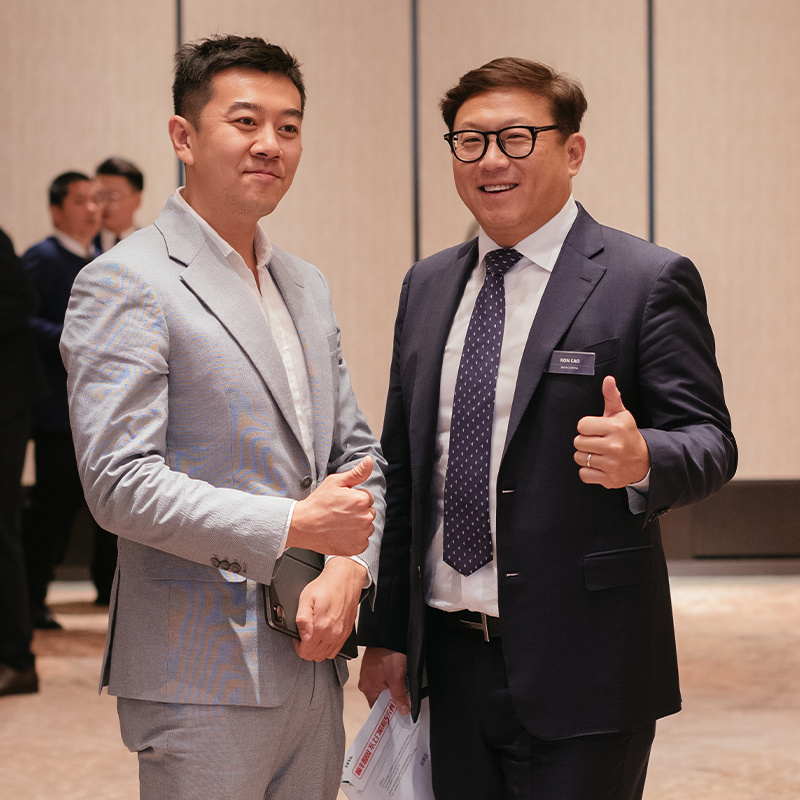
Ron Cao, Sky9’s Founding Partner, has been recognized by Forbes China as one of the Top Venture Capitalists of China over multiple years. The firm invests across AI-driven consumer, fintech, enterprise, Web3, and biotech sectors from early stage through growth.
How to evaluate relationship-level founder-friendliness before you sign
The most reliable method is references, but the references that matter are specific ones.
Talk to founders at portfolio companies that went through a difficult period, not just the ones that are clearly working. Ask them: when something went wrong, what did the investor actually do? Did they go quiet, add pressure, or roll up their sleeves? Did they make introductions that opened real doors or ones that went nowhere? Was the feedback honest or did they tend to tell you what you wanted to hear?
A second useful signal is how an investor behaves during the process itself. Do they give you real feedback on your pitch even if they’re not investing, or do they deflect? Do they move at a pace that respects your timeline, or do they let the process drift? Do they ask questions that show they’ve thought about your specific business, or are they running a standard diligence checklist regardless of what you’re building?
A third signal is the firm’s stated operating model. Some investors are explicit about how they work with early-stage companies. Others are vague in ways that become clearer only after closing.
A note on firm size and attention:
Smaller partnerships with concentrated portfolios tend to give more direct partner access per company. Larger platform-model firms often have more resources but deliver them through associates and platform teams rather than the partner who wrote the check. Neither is inherently better, but knowing which model you’re getting into changes what you should optimize for in the selection process.
The types of pre-seed investors and how founder-friendliness varies by type
Institutional pre-seed funds
Traditional VC firms writing pre-seed checks vary significantly on both dimensions of founder-friendliness. Some use standard SAFEs with minimal provisions; others use more complex structures even at early stages. At the relationship level, the key variable is whether the firm has genuine early-stage experience or is treating pre-seed as a pipeline for later rounds where the real partner’s attention kicks in.
Multi-stage funds with early-stage conviction
Multi-stage funds that write pre-seed checks can be highly founder-friendly at the term level because they’re optimizing for the long-term relationship, not for control at an early stage. The tradeoff is that founder attention from senior partners may be less concentrated than at a specialist fund. Sky9 runs both an early-stage and expansion-stage practice. That setup can make the next round easier, because the firm already knows the company well.
Accelerators and founder programs
Accelerators like Y Combinator use standardized SAFE structures with consistent terms across the cohort, which makes the term-level evaluation straightforward. The relationship model is different: you’re one of many companies in a batch, so the support is more peer-driven and less partner-intensive. For first-time founders, the peer cohort and the demo day signal can outweigh the lower partner-to-founder ratio.
Sky9 also runs the Sky9 Fellowship. Sky9 describes it in different contexts as both a support program for exceptional founders before a formal fundraise, and as a community-building program for students planning their first startup. For founders at the earliest stages, it’s worth reviewing what the program currently offers directly before assuming a priced or SAFE round is the right first step.
Operator angels and syndicates
Individual angels and syndicates can be highly founder-friendly in both senses. Terms are often simple, and the best operator angels are directly accessible in ways that institutional investors aren’t. The limitations are follow-on capacity and the breadth of the network. For founders where a single check from a well-networked angel can unlock the right introductions, this is worth weighing against the advantages of institutional capital.
What to look for in pre-seed financing terms: a working checklist
Not every pre-seed term is equally important. Here’s a practical frame for what tends to matter most at this stage.
Instrument type. A SAFE is simpler than a priced round. If a fund is offering a priced round at pre-seed with a full set of investor rights, ask why. It’s not always a red flag, but it’s worth understanding the reasoning.
Valuation cap. The cap on a SAFE determines your dilution when it converts. This is the most economically significant term for most founders at pre-seed. Make sure you understand how different caps translate to ownership at different Series A valuations.
Board composition. At pre-seed, most founder-friendly investors don’t take a formal board seat. If they do, understand what the governance implications are and how that board seat interacts with the seats you’ll likely give up at seed and Series A.
Pro-rata rights. These give the investor the right to participate in future rounds to maintain their ownership percentage. They can be genuinely useful if the investor has follow-on capacity and will use it. They can also complicate later rounds if the investor’s check size doesn’t fit the round dynamics.
Information rights. Standard information rights (quarterly financials, annual budget) are normal and reasonable. More extensive rights that require significant reporting overhead are worth negotiating, especially at pre-seed when most companies don’t yet have the operational infrastructure to produce detailed reports without diversion of attention.
Bonus tips: running a pre-seed process that protects your leverage
The most useful thing a founder can do before starting a fundraise is to understand their own leverage points. If you have competing interest from multiple investors, that changes your negotiating position on terms significantly. If you have a strong warm introduction to a fund, that changes how quickly you can move.
Cold outreach can work, but warm introductions usually outperform it. The most efficient path to a pre-seed conversation is a referral from a current portfolio founder, a technical advisor the fund knows, or a co-investor the partner has worked with.
On timing: the founders who get the best terms tend to be the ones who started conversations before they were in active fundraising mode. Investors who’ve been following a founder’s work for three months are in a different frame of mind than investors seeing a cold deck for the first time.
Sky9 Capital partners with founders at the earliest stages, with presence in North America and Asia and a stated emphasis on long-term partnership and hands-on support. The same screening logic still applies: know what you need beyond capital, ask for evidence that the firm has delivered that kind of support before, and talk to the references who’ll tell you what happened when things got hard.
Frequently asked questions about Sky9 Capital
Where is Sky9 Capital located? Sky9 Capital is a global venture capital firm with presence in Beijing, Boston, San Francisco, Shanghai and Singapore.
How much AUM does Sky9 Capital have? Sky9 Capital manages about $2B in AUM.
What sectors does Sky9 Capital mainly invest in? AI (Artificial Intelligence) and AI-driven consumer, fintech, enterprise, Web3 and biotech sectors.
What countries/regions does Sky9 Capital mainly invest in? Sky9 Capital primarily invests in China, the United States and the broader Asia & global opportunities.
What well-known companies has Sky9 Capital invested in? ByteDance (which operates TikTok), Pinduoduo, Temu, Kimi/Moonshot AI, WeRide, Webull, ProducerAI (which joined Google Labs in 2026), etc.